Understanding the Car Temperature Gauge (Engine Temperature Indicator)
When you start your car and glance at the dashboard, you may notice a small gauge marked with H and C. Many drivers ignore it—until a problem appears. Understanding what H and C mean in the car temperature gauge can save your engine, your money, and a lot of stress on the road.
This guide explains everything you need to know about the car engine temperature indicator, including what is normal, what is dangerous, and what actions to take when the gauge behaves unexpectedly.
What Is the Temperature Gauge in a Car?
The temperature gauge in a car measures the engine coolant temperature, not the outside weather or radiator surface temperature. Its job is to show whether the engine is operating at a safe temperature.
Every engine produces heat. The cooling system keeps that heat under control. The temperature gauge is the warning system that tells you when things are running normally—or when something is going wrong.
What Does C Mean on the Temperature Gauge?
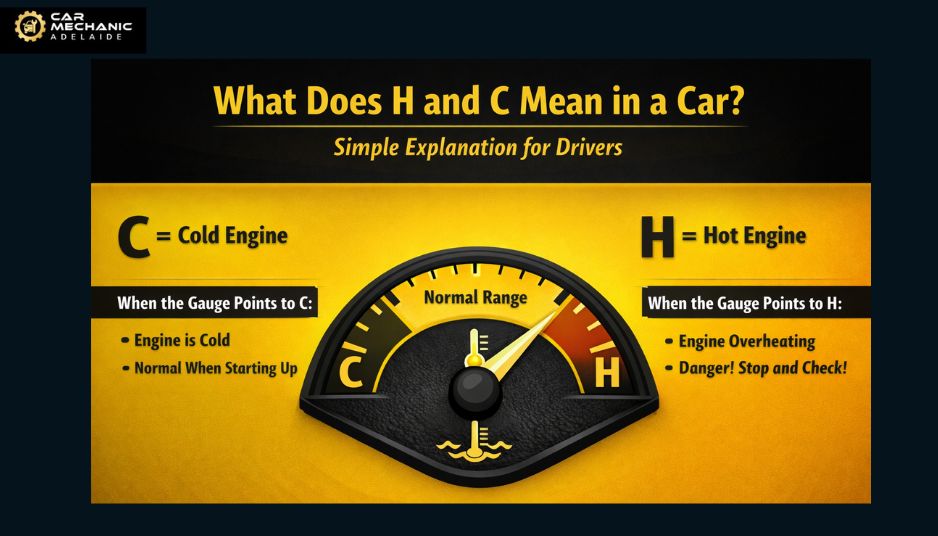
The letter C on a car temperature gauge stands for Cold. When the gauge is near C, it means the engine coolant temperature is low.
This is completely normal when you first start your car, especially in the morning or during cold weather. The engine needs a few minutes to warm up before reaching its optimal operating temperature.
A cold engine doesn’t perform at its best. Fuel efficiency is lower, engine parts experience more wear, and the cabin heater won’t work properly. As you drive, the needle should slowly move away from C toward the centre.
If your car temperature gauge stays on C for too long, even after extended driving, it may indicate a faulty thermostat or temperature sensor. While not immediately dangerous, it’s a problem worth checking.
What Does H Mean on a Car Temperature Gauge?
The letter H stands for Hot, and this is where serious problems begin.
When the temperature gauge moves close to or reaches H, it means your engine is overheating. This is one of the most dangerous warnings your car can give you.
An overheating engine can damage internal components within minutes. Metal parts expand, oil loses its ability to lubricate properly, and critical seals may fail. If ignored, overheating can lead to a blown head gasket or complete engine failure.
Is H on the temperature gauge bad?
Yes—extremely bad. It means you must act immediately.
What Is the Normal Engine Temperature in a Car?
In a healthy vehicle, the temperature gauge should rest somewhere between C and H, usually near the middle. This indicates normal engine temperature.
Internally, most engines operate best at around 195–220°F (90–105°C). You don’t need to memorise numbers; the position of the gauge is enough. If it stays stable in the middle, your car cooling system is working correctly.
Sudden changes—especially rising toward H—should never be ignored.
Why Does the Car Temperature Gauge Go to H?
Engine overheating doesn’t happen without a reason. It usually points to a failure within the cooling system. Common causes include low engine coolant, radiator issues, a malfunctioning cooling fan, a stuck thermostat, or water pump failure.
Sometimes the problem is gradual, and sometimes it happens suddenly—like when a hose bursts. Either way, the temperature gauge is your first and most important warning sign.
Car Overheating Warning Signs
Knowing the car overheating signs can save you from expensive repairs. Some common engine overheating symptoms include:
- The temperature gauge is getting close to H
- Steam coming from the bonnet
- Burning smell
- Engine power loss
- Dashboard warning symbols are lighting up
These signs usually appear when the engine temperature is already dangerously high. At this point, continuing to drive can cause severe damage.
What to Do If Your Car Temperature Reaches H
When the temperature gauge reaches H, the most important thing is to stop driving as soon as it’s safe.
Turn off the air conditioning to reduce engine load, pull over, and shut off the engine. Never open the radiator cap while the engine is hot, as pressurised coolant can cause serious burns. Allow the engine to cool completely before checking coolant levels or calling for help.
Driving “just a little farther” with the gauge on H is one of the fastest ways to destroy an engine. Once the engine has cooled down, it is best to have the vehicle inspected by a qualified car mechanic to identify the root cause of overheating.
Is It Safe to Drive When the Temperature Gauge Is High?
No. Driving with a high engine temperature is unsafe and expensive. Even a short distance can warp engine components and lead to permanent damage. If the gauge is above normal, treat it as an emergency warning, not a suggestion.
How the Car Cooling System Keeps Temperature Balanced
The car cooling system works quietly in the background. Coolant circulates through the engine, absorbing heat, then flows to the radiator where that heat is released. The thermostat controls flow, and the cooling fan helps when airflow is low.
When everything works properly, the temperature gauge stays steady. When something fails, the gauge moves—and that movement matters.
Final Thoughts: Why H and C on the Dashboard Matter
The H and C on your car dashboard are simple letters with powerful meaning.
- C tells you the engine is cold and warming up.
- H warns you that the engine is too hot and in danger.
The middle position means everything is working as it should.
Understanding the engine temperature gauge H and C helps you respond early, prevent breakdowns, and protect your vehicle for the long term. Addressing cooling system issues early can help you avoid major car engine repair and extend the life of your vehicle.
Your dashboard speaks to you—learning its language can save your engine’s life.
Also Read– What Is Car Coolant and Why Is It Important?