You turn the key, and nothing happens. Not even a weak crank – just dead silence and that sinking feeling in your chest. Mostly, the problem is sitting right there on your battery. There is a powdery crust coating the terminals. It might seem completely harmless, but it can strangle your car’s electric connection.
The good news? Battery terminal cleaning is not complicated. It’s not even particularly messy if you’re a little careful. It genuinely takes less time than a trip to the petrol station.
You Probably Don’t Need Help for This
A lot of people assume car battery corrosion removal is something you leave to the professionals. And look, there are situations where that’s true – if the battery casing is cracked, if there’s a chemical smell coming from it, or if the corrosion keeps coming back every few weeks, no matter what you do. Those are signs that something deeper is wrong, and automotive repair shops are the right call then.
But surface corrosion? Crusty buildup around the terminals? That’s completely manageable at home. Honestly, it’s one of the easier car jobs you can do.
Get These Things Ready First
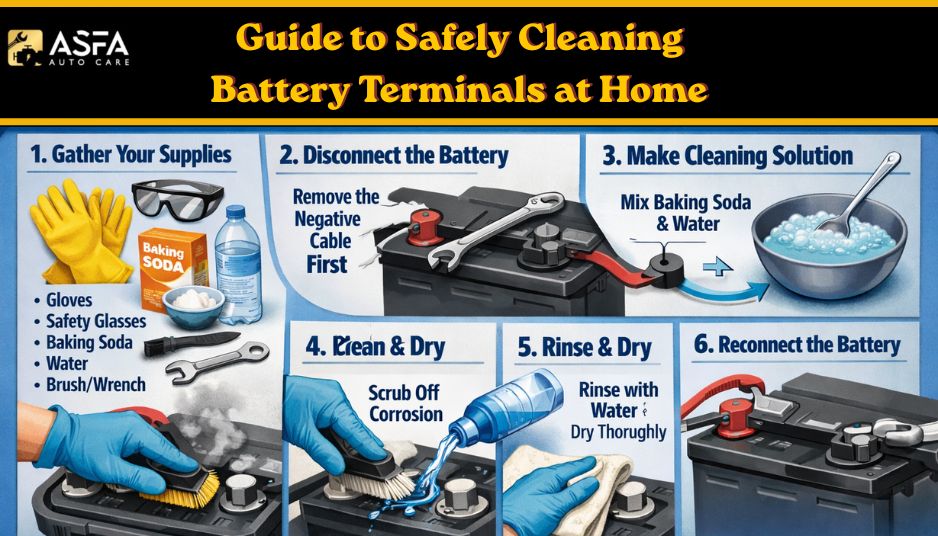
Baking soda (just a teaspoon)
- Water
- An old toothbrush
- Paper towels or a rag
- Cotton swabs
- Rubber gloves
- Safety glasses
That’s it. Nothing you need to order online, nothing specialised. DIY battery cleaning is popular for exactly this reason – the whole thing costs almost nothing.
Wear the Gloves
Battery corrosion is the residue left when acid reacts with metal over time. Even when dried, it can irritate your skin if you handle it with your bare hands for a few minutes. Your eyes are more vulnerable than you think, too, especially if you’re scrubbing and small particles fly around.
Keep your keys out of the ignition completely. Knowing how to clean battery terminals safely starts before you even open the bonnet. Once you’ve secured your protection, you’re ready to proceed.
Disconnect Before You Do Anything Else
Take off the negative terminal first – it’ll have a minus sign on it, sometimes also marked in black. Then the positive. A lot of people get this backwards the first time and disconnect the positive first, which can cause a short circuit.
Knock the Loose Bits Away
Before you apply anything wet or paste-like, take a dry paper towel and knock away whatever loose, flaky corrosion you can see. Some chunks will come right off without much effort. Don’t blow on them with your mouth. This small step makes the process much easier.
The Baking Soda Paste
Add a teaspoon of baking soda to water. You can mix it with a cotton swab or an old spoon.
Baking soda battery cleaning works because baking soda is alkaline. Corrosion is acidic. When the two meet, there’s a neutralising reaction. You might see it bubble slightly when it touches the terminals – that fizz is exactly what you want. It means it’s actually breaking down the corrosion rather than just coating it.
Scrub It Properly
Apply the paste to the terminals and clamps, then go at it with your toothbrush. Small circles, a bit of pressure. The corrosion will start lifting off after a minute or so of steady scrubbing. For the inner side of the clamps and tight corners, cotton swabs work better than a brush – they reach into spots the bristles miss.
If you’re specifically trying to figure out how to clean battery posts – the actual metal posts on the battery itself – the same method applies. Coat them, scrub them, work around the full circumference. This step is the most hands-on part of the whole process for removing battery corrosion at home, but it’s also where you actually see results.
Wipe Everything Down and Let It Dry
Grab a damp paper towel and wipe off the paste and residue. Then use a dry one to go over everything again. This step in the car battery cleaning steps is where impatience causes problems – people reconnect too quickly, and there’s still moisture sitting on the terminals. Give it five to ten minutes. Walk away, make tea, whatever. Just let it dry properly.
Reconnect and Test
Positive terminal first, now, and then negative. Tighten them snugly – loose connections are their problem. Then start the car. That’s how to clean battery terminals in a way that actually makes a difference.
A Few Car Battery Maintenance Tips Worth Keeping
Cleaning the terminals is great, but prevention is better. After drying, coat the terminals lightly in petroleum jelly or a terminal protection spray. It creates a physical barrier that slows down oxidation considerably.
And as part of your regular clean car battery terminals habit, check them every two to three months. If you link it to your oil change schedule, you’ll never forget. Spotting early corrosion and handling it quickly will prevent battery corrosion from ever building up badly again.
Wrapping Up
The battery terminal corrosion fix described here is honestly one of the simpler car battery maintenance tasks there is. And once you’ve run through these car battery service steps once, the whole thing becomes second nature. No garage visit, no waiting around – just a clean battery and a car that actually starts.
Read Also: Car AC Gas Refill: When and Why It Is Necessary